
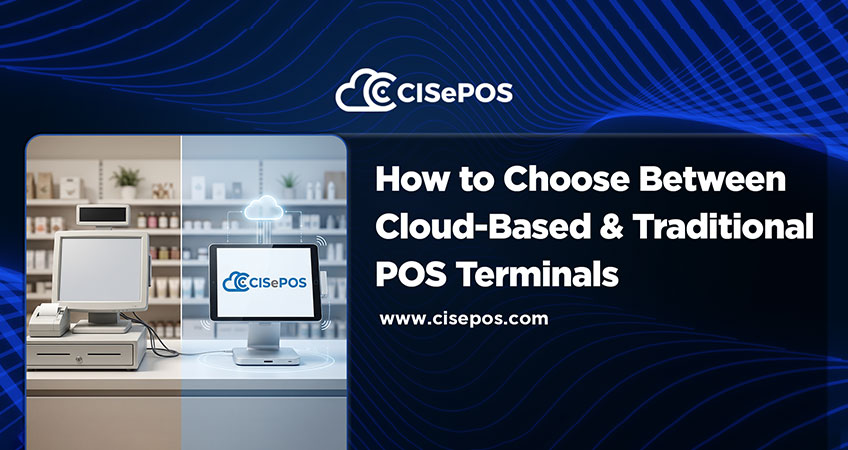
Since the world is moving forward towards more advancement, the change in POS technology is impossible to ignore. Business owners today face a real choice and it is not a simple one. Choosing between cloud-based and traditional POS terminals can feel overwhelming because both options promise speed, control, and better daily operations. However, the system you pick shapes everything from how fast your staff serves customers to how well you track your inventory at the end of the day.
This is not just a tech decision. It is a business decision. And getting it wrong can slow you down in ways you will not notice until the damage is already done. So, in this guide, we break everything down in plain, simple terms. By the end, you will know exactly which system fits your goals, your team, and the direction your business is heading.
What is a traditional POS system?
A traditional POS system, also called a legacy POS system, runs on local servers inside your business. All your sales data, inventory, and reports sit on hardware that lives in your store. If you are not there, you cannot access it. Simple as that.
These systems have been around since the 1970s and work without any internet connection, which is a real plus in areas with unstable Wi-Fi. But the costs add up fast. Hardware, software, installation, and IT support all need budget before you even get started. And if that local server ever fails, your data could be gone for good. Expanding to a new location also means buying more equipment every single time.
What is a cloud-based POS system?
A cloud-based POS system stores your data online and runs through the internet. You can log in from a tablet, phone, or laptop from anywhere at any time. Think of it like Google Drive for your business. Your data is always there, always updated, and always safe even if a device gets lost or broken.
You pay a monthly or yearly subscription instead of one big upfront cost. The provider handles all updates automatically so you never have to call IT. Cloud-based epos solutions also run on smaller portable devices, so your staff can take orders at the table and process payments on the floor. You can even manage everything from home. That kind of flexibility is simply not possible with a traditional setup.
What are the Benefits of Cloud-Based POS Systems?
Access your Business from Anywhere
With a cloud-based POS system, you do not have to be on-site to know what is happening. You can check real-time sales, monitor staff, and review inventory from your phone — whether you are at home, travelling, or running another location.
Updates Happen Automatically
There are no IT visits, no scheduled downtime, and no manual installs. Security patches, new features, and compliance updates all roll out in the background. Your system stays current and PCI DSS compliant without any effort on your end.
Easy Integrations and Scalability
Cloud systems connect smoothly with delivery platforms, accounting tools, loyalty programs, and online ordering systems. And when you open a new branch, everything syncs from the same dashboard no extra hardware needed
Disadvantages of a cloud-based POS system
Dependent on Internet Connection
A slow or dropped connection can disrupt your operations. Most cloud-based EPOS systems offer an offline mode to keep payments running during outages, but the quality of that offline experience varies by provider so check before you sign up.
Subscription Costs
The upfront cost is low, but monthly fees grow as your business does. More devices, more users, more features it all increases your bill. Over a few years, the total cost can sometimes match what you would have paid for a traditional system.
Learning Curve
If your team is used to a legacy POS setup, moving to the cloud takes training and adjustment. Most providers offer onboarding support, but factor that transition time into your planning.
Advantages of a traditional POS system
Works Without the Internet
Traditional POS systems run on local servers, so a Wi-Fi outage does not stop your business. If you operate in an area with unreliable connectivity or across multiple locations in low-coverage regions, this stability is a real advantage.
One-time Cost, No Recurring Fees
You pay once for the software and hardware, and that is it. No monthly charges, no price hikes, no reliance on a third-party subscription. For businesses on a fixed budget, that predictability is genuinely useful.
Full Control Over Data
Everything stays on your own server, inside your business. You do not have to trust an external provider with your data, which some owners find more reassuring than a cloud setup.
Disadvantages of a traditional POS system
High upfront investment
Hardware, software licenses, installation, and IT support all cost money before you even get started. Any issue that comes up later also requires someone to come in and fix it in person, which means downtime and added expense.
Manual Updates are a Real Hassle
Traditional systems do not update themselves. That means scheduling IT visits, risking data issues during the process, and sometimes skipping updates altogether. Skipping them leaves your system exposed to security threats and stuck on older features.
Data Loss and Limited Scalability
If your local server fails due to a hardware fault, power surge, or physical damage, you could lose everything sales history, customer records, and inventory data. Backups help, but they require the right setup. Scaling up is also much harder, since adding a new location or integrating delivery platforms means more hardware and more cost.
Is Cloud POS Better and Reliable than Traditional POS?
For most businesses today, yes. Cloud-based POS systems run on multiple backup servers and typically hit around 99.9% uptime. Traditional legacy POS systems sit closer to 95 to 97%. That gap might sound small but it adds up to several extra days of potential downtime every year. And every hour your system is down is revenue walking out the door.
Security is another area where cloud pulls ahead. Updates and patches happen automatically, fraud detection runs in the background, and payment security standards are met without you having to manage any of it. Traditional systems rely on manual updates that many businesses simply delay, and that delay leaves real gaps over time.
That said, if your internet is genuinely unreliable or you prefer paying once rather than monthly, a traditional system is still a solid choice. The key is knowing what your business actually needs today and where you plan to take it tomorrow.