
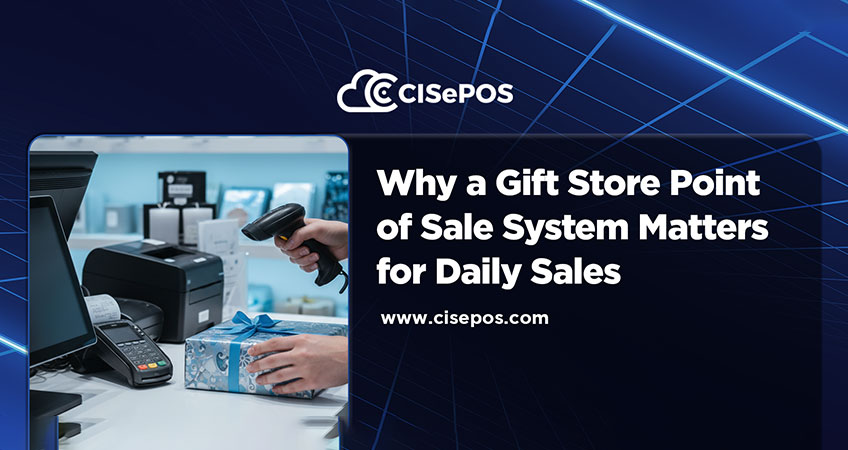
The Essential Gift Store Point of Sale
No industry has a closer relationship with its customers’ feelings than the present shops. Each item needs to tell a story and form a connection to be sold. Though much of this depends on the quality of the present itself, there are other ways to amplify sales. Furthermore, the behind-the-scenes operations play just as crucial a role as the front-of-house aesthetics. Excellence in only one area is not enough for a business to be successful. That is where the gift store Point of Sale (POS) comes in.
For many years, the humble, albeit reliable, cash register was sufficient. It did everything it was required to do at that time. However, today’s fast-paced, omnichannel retail environment demands more than that. Instead, it requires a modern, specialised gift store Point of Sale system to succeed.
Moreover, it has evolved from a simple transaction processor. Today, it acts as the central nervous system of a thriving retail business. Furthermore, it streamlines daily operations, provides invaluable insights, and utilises resources more effectively. Staff otherwise required to process transactions are now deployed to help customers find the perfect present.
The Revolutionary Gift Store Point of Sale
Before we explain its advantages, let’s first discuss why it replaced its predecessor. Traditionally, customers would enter present stores and look for the right item. Meanwhile, the cash register simply processed the transaction once the customer made their decision.
Alternatively, a gift store’s point of Sale transforms this stale process into something dynamic. Moreover, it automates tasks and integrates every facet of the workflow into a single platform. This thereby turns a routine procedure into a smooth, efficient operation.
The Operational Benefits Of The Gift Store Point of Sale
Now that we understand what it is, let’s look at why stores are implementing it. Furthermore, the advantages are divided into operational and customer-related benefits. Hence, it provides deeper insight into the value it brings to a company.
1. Streamlining the Checkout Process: Speedy, flexible operations at checkout are no longer a recommended feature for stores. Instead, they are customers’ expectations. An inability to offer that would lead to a poor customer experience and ultimately to retention. That’s why modern gift store’s Point of Sale accelerators are integrated to accelerate transactions through barcode scanning. Thus, it eliminates the need for manual input, thereby reducing errors.
Additionally, today’s customers often carry little cash. Hence, stores are required to offer a robust POS system that supports multiple payment methods. These range from credit cards to mobile wallets like Apple Pay to split-tender transactions combining gift cards and cash, and ultimately, creating a single, seamless interface.
2. Real-Time Inventory Management: Keeping track of stock manually for stores with diverse, seasonal inventory is difficult. Alternatively, a POS system automates it entirely. Moreover, every sale triggers an automatic deduction from the inventory count in real time. This serves two purposes.
Firstly, it prevents overselling, which is of immense importance to digital stores. Secondly, it provides accurate data to inform purchasing decisions. Furthermore, alerting owners when certain popular items are running low. Hence, it reduces the risk of losing sales due to empty shelves.
3. Empowering Staff and Simplifying Operations: At its core, a POS system is user-friendly. Instead of spending weeks on training seasonal or volunteer staff, a gift store’s Point of Sale system helps them get up to speed quickly. Additionally, its intuitive touchscreen interface and role-based permissions help simplify the matter considerably.
Fresh hires can become productive instantly. Meanwhile, owners can restrict access to sensitive functions like pricing overrides, sales volume, and client details. Thereby making tedious tasks like daily reconciliation moot. They are replaced by comparing cash on hand with the system’s automated reports.
Sales Benefits Of Gift Store Point Of Sale Systems
Though operational efficiency is paramount, the essence of the gift store’s Point of Sale lies in enhanced customer relationships. By recording and utilising data, routine transactions are transformed into personalised experiences. Thereby, building loyalty and driving repeat customer sales.
1. The Power of Customer Profiles: A modern gift store’s Point of Sale system includes built-in Customer Relationship Management (CRM) features. When a customer’s information is recorded with consent, profiles can be built from it. Tracking purchasing history, preferences, and even occasions like birthdays and anniversaries is invaluable.
Furthermore, by understanding the customer’s wants, the staff member can guide them to their desired destination with ease. Whether it is by mentioning a new shipment has just arrived or offering select discounts and deals to encourage sales. Consequently, the customer transitions from a casual shopper to a loyal advocate.
2. Implementing Seamless Loyalty Programs: A gift store’s Point of Sale system seamlessly implements and manages loyalty programs. Instead of using punch cards that deteriorate with time and are forgivable, the POS system automatically tracks points and rewards. It achieves this using a customer’s phone number or profile.
Hence, it encourages repeat customers without requiring any extra effort from the staff or customers. Additionally, managing gift cards becomes incredibly easy. The POS system instantly sells, redeems, and checks the balance on these cards. This makes a friction-free option for shoppers.
3. Actionable Analytics for Smarter Business Decisions: The data recorded during transactions serves as a treasure trove in the right hands. Moreover, daily sales reports go beyond just arithematic calculations. Instead, they reveal best-selling items, slow movers, peak shopping hours, and average transaction values. Understanding what happens in a store at a granular level helps owners to proactively manage the business. Thus, empowering them to make smart, data-driven decisions using the following indicators.
- Optimise your product mix: Identify which items to reorder and which to put on clearance.
- Plan targeted promotions: Create bundles of items that are frequently bought together.
- Manage staff effectively: Schedule more employees during your busiest hours to maintain service levels.
- Improve purchasing accuracy: Use sales trends to negotiate better terms with vendors and avoid overstocking items that don’t sell.
Conclusion
All in all, the importance of gift store Point of Sale systems is difficult to undersell. They have revolutionized the present buying experience for the better. Furthermore, any company not integrating it into its workflow will feel its impact sooner rather than later. Given that stores using will have an edge over those who don’t, it will be difficult for the latter to survive in the long run.
Frequently Asked Questions (FAQs)
Can a POS system work for both in-store and online sales?
The short answer is – Yes. Modern systems (often called omnichannel POS) sync inventory in real time between your physical store and website. Hence, it is necessary to prevent overselling and ensure accurate stock counts across both channels.
What is a POS system for a store, and how is it different from a cash register?
It is a complete software/hardware solution that manages sales, inventory, customer data, and reports. On the other hand, a cash register is just a drawer for cash that records basic totals.
What specific features should I look for in a gift shop pos?
Focus on robust inventory management, built-in CRM for customer tracking, gift card/loyalty program support, and mobile POS capabilities. The latter helps you to check out customers anywhere on the floor.
How can a gift shop’s point of sale improve customer service?
It speeds up checkout, reduces wait times, and empowers staff with customer purchase history. Thereby, enabling them to make personalised recommendations. Hence, it creates a more thoughtful and efficient shopping experience.