
The Revolutionary Restaurant POS
Gone are the days when restaurants only needed to concern themselves regarding food only. In today’s world, speed, accuracy, inventory control, staff coordination, and customer experience are equally important factors. Moreover, even if a single element is not aligned properly, it is unlikely that the business will survive long. Furthermore, today’s customers are not only looking for delicious food but efficient service as well. That is where the restaurant POS comes into play.
Many consider it the greatest advancement in the restaurant industry in recent memory. Additionally, it has become a necessary part of many businesses around the world. Not only does a restaurant POS speed up order processing, but transforms both front of house and back office operations. Hence, making it a necessary inclusion for restaurants around the world in order to compete effectively.
What Is a Restaurant POS System?
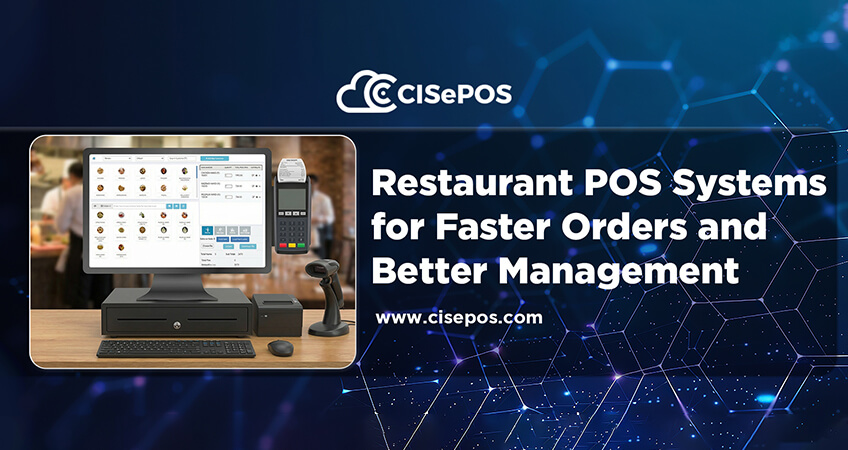
Before we proceed to describe its integral nature in today’s market, let’s first understand what it is. To put it simply, a restaurant POS (Point of Sale) system is a combination of software and hardware. It is used to manage sales transactions, orders, payments, and operational data in restaurants.
Furthermore, unlike traditional cash registers, this modern wonder acts as a complete restaurant management system. It handles everything from billing and inventory to staff scheduling and reporting. A typical restaurant POS offers the following features:
Touchscreen terminals or tablets
- POS software
- Receipt printers
- Cash drawers
- Card and mobile payment integration
- Kitchen Display Systems (KDS)
All the elements come together to provide restaurants with a medium to operate faster, smarter, and more accurately.
Why Restaurant POS Systems Matter Today
Though these properties are impressive on their own, many people still deem restaurant POS as a recommendation, not a necessity. However, what they fail to understand is that the business has changed to cater to the evolved customer expectations. Today, diners demand quick service, accurate orders, and flexible payment options to provide a good review. Moreover, in an increasingly digitized world, a poor review may prove more damaging than a good review, proving helpful. Hence, manual processes are no longer a viable option in modern businesses. A restaurant POS helps in the following ways:
- Reducing order errors
- Speeding up table service and takeaways
- Improving coordination between front and kitchen staff
- Providing real time business insights
- Supporting digital payments and online orders
How Restaurant POS Systems Speed Up Orders
Since we understand its importance and structure, let’s see how it helps modern restaurants better their operations. Though plenty, here are some points that have proven most helpful:
- Faster Order Taking: Instead of writing orders down on notepads, workers today can input orders directly into the POS using touchscreens. Then, the order is instantly sent to the kitchen through the system rather than the server communicating it to them vocally. Hence, eliminating any delay or mistakes that handwritten tickets have often caused.
- Reduced Errors: Customers can simply select their order and write any customization by themselves from a menu. Thereby, staff avoid any miscommunication leading to waste and dissatisfaction. Moreover, this process improves both accuracy and efficiency in restaurants.
- Kitchen Display Systems (KDS): The main reason why many restaurants were reluctant to change menus before was due to the cost of printing. Not only would they have constantly printed new menus for the most minor changes but keep track of each one along with the day and hour. That’s why the arrival of kitchen screens proved incredibly successful. It enabled orders to appear instantly on a screen that’s prioritized by time and type. Additionally, it proved useful for chefs as well. Now, they work more efficiently and consistently.
- Quick Billing and Payments: An accounting error was more likely to occur during rush hours at restaurants. Due to the sheer volume of people wanting to pay their bills as quickly as possible, the rushed staff would make mistakes. However, that all changed with the arrival of restaurant POS systems. They support multiple payment methods. These include cash, cards, QR payments, and mobile wallets. Thus, allowing faster checkout and table turnover leads to higher revenue and minimal costs.
Key Features to Look for in Restaurant POS Software
With their rising popularity as restaurant POS, many tech companies have developed their own software. Though different in various ways, all of them are designed to provide businesses with the same ease of operations. However, there are some key features present in all of them. Examining them will help restaurants decide which is the best pick for them.
- User Friendly Interface: The staff of restaurants should be provided with training to operate these systems. Additionally, the user interface need not be too complicated for workers and diners alike.
- Menu Management: Easily changing a menu is arguably the most important factor of buying a restaurant POS. Additionally, it should provide easy updating of prices, adding items, creating combos and managing variants without any problems.
- Inventory & Stock Control: Inform the staff automatically if ingredients or other stocks are dangerously low. Hence, enabling the staff to only act when required and not having to constantly monitor inventory levels.
- Multi Branch Support: For restaurants operating multiple chains, the ability to keep track of each outlet is crucial. Moreover, moving from dashboard to dashboard seamlessly and managing tasks efficiently will help businesses function effectively.
- Reporting & Analytics: With global prices fluctuating rapidly, real time insights have become more important than ever before. Understanding how sales, expenses, and inventory is acting will give restaurants an edge in a tough market.
- Online Ordering Integration: A new feature that is gradually gaining momentum is restaurant POS systems being integrated with food delivery apps. Additionally, these in-house ordering platforms have enhanced their accessibility considerably.
- Secure Payment Processing: In traditional operations, businesses had to wait for a significant period of time to process payments – especially large ones. However, that changed when various secure payments were introduced. These systems have made transactions more easy and secure than ever before. Now, support for cards, wallets, and contactless payments are everywhere.
Conclusion
At the end of the day, there is no denying that restaurant POS has changed the industry forever. Moreover, they have altered the way restaurants function around the world. If a dining business refuses to integrate a Point of Sale system in their business, it is unlikely to survive in the long run.
Furthermore, the market today is incredibly intense with competition. Inefficiency, even on the slightest scale, is punished severely. Hence, making restaurant POS a necessity, not a recommendation.
FAQs
Q: What is a restaurant POS system?
A: In short, it is a software and hardware that manages orders, payments, inventory, staff, and reporting in a restaurant.In short, it is a software and hardware that manages orders, payments, inventory, staff, and reporting in a restaurant.
Q: How does a restaurant POS improve management?
A: It automates operations, reduces errors, provides real time data, and helps managers make better decisions.
Q: Is restaurant POS software in Pakistan affordable?
A: Yes. There are multiple POS software Pakistan options. Moreover, they offer affordable plans for small restaurants and scalable solutions for chains.
Q: Can restaurant POS software integrate with delivery apps?
A: Most modern restaurant software supports integration with food delivery platforms. Additionally, it integrates online ordering systems as well.
Q: Is POS software suitable for small restaurants?
A: Absolutely. Even small cafés benefit from faster billing, inventory control, and sales tracking.